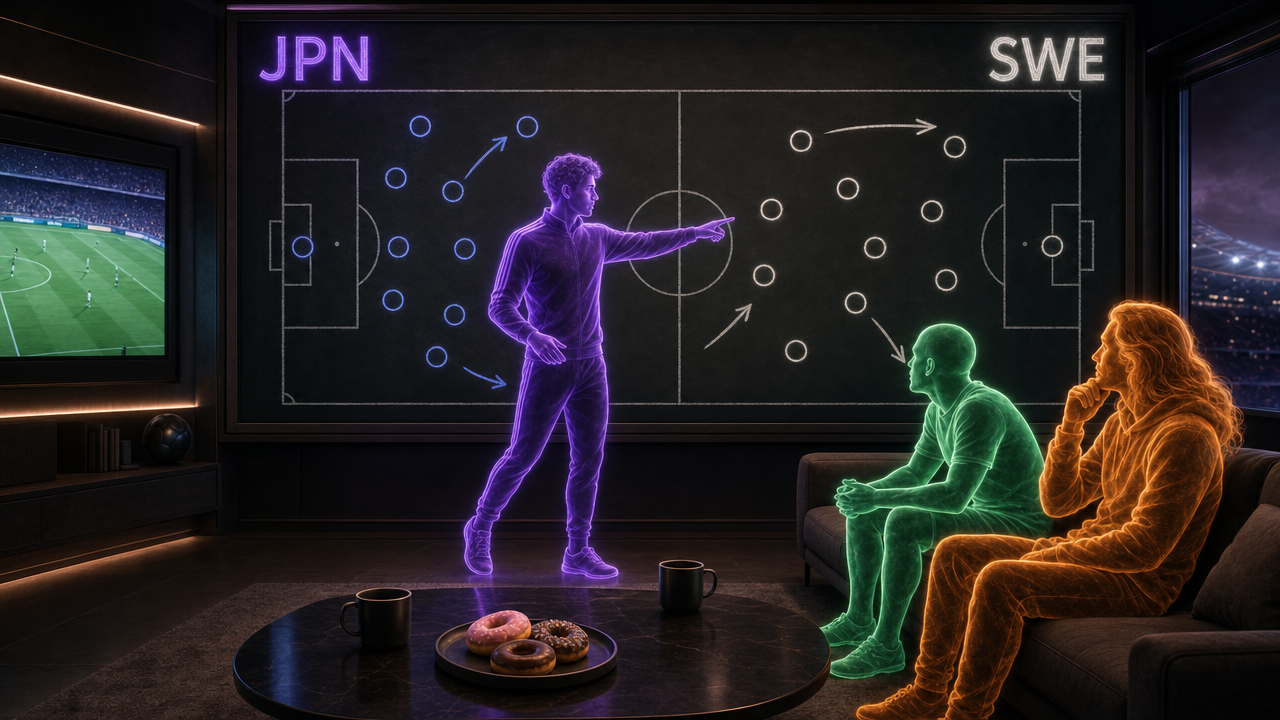
Japan vs Sweden: Trust the side with the cleaner map

Kickoff is 25 June 2026, 23:00 UTC in the World Cup 2026, and this group finale has a proper tournament crackle. Japan want top spot, while Sweden want the cleanest route into the knockouts.
That matters because this is not a sleepy, end-of-term kickabout with the substitutes waving from every corner of the pitch. The market still seems a touch too nervous about Japan’s rotation, and that is where the angle begins.
Japan still have their steering wheel
The important point is that Japan have not emptied the cupboard. Moriyasu may tweak, as he often does, but the spine of the side and the familiar attacking shape remain very much alive.
With Kamada, Doan, Nakamura, Maeda and Ueda available to knit the front half together, Japan still have rhythm and runners. Losing Kubo hurts, and Mitoma is not in the squad, but this is not an attack suddenly searching for its instruction manual.
Recent evidence is kind to Japan, too. They handled Tunisia with authority, showed patience to draw with the Netherlands, and earlier spring wins over England and Scotland underlined how well this group travels.
Moriyasu’s public message was also telling: he wants to win, not chase a cartoon scoreboard and lose the team’s balance. That suits Japan, because their best football often comes from structure first and sharp transition second.
Sweden are dangerous, but the repairs look rushed
Sweden’s front line gives any bet against them a little pinch on the sleeve. Isak and Gyökeres are an excellent pair, the sort of forwards who can turn one loose pass into a fire drill.
But Sweden’s problem has not been a lack of sharp teeth; it has been the fence behind them. The heavy defeat to the Netherlands followed defensive warnings against Norway and Greece, and now Potter is shuffling the deck in a hurry.
A change in goal, a reshaped midfield and a different defensive balance may all be sensible ideas. Still, doing it in a World Cup group decider is a bit like assembling flat-pack furniture while the guests are already at the door.
Sweden also have to think more aggressively than Japan. A win removes the arithmetic headache, but that need to push can leave the exact spaces Japan enjoy attacking through wing-backs, inside forwards and Ueda’s movement.
The cleaner team is priced too gently
This is the heart of it: Japan look the more coherent side right now. They have a clearer game model, better collective spacing, and enough attacking variety even without their two most glamorous wide creators.
Sweden’s best route is obvious and scary: get the ball early into channels, let the strikers run, and ask Japan’s back line some uncomfortable questions. Yet obvious does not always mean easy, especially against a side that presses and resets so calmly.
I did glance toward goals, because if Sweden are chasing after the break, the match could roll downhill with bells on. The trouble is that Japan are not obliged to turn this into a fairground ride, and Moriyasu has said as much.
The safer-looking Sweden cushion also lacks bite for me. If Japan’s structure wins the middle of the pitch, the home side have the cleaner route to controlling the match and making Sweden’s reshuffle feel awkward.
So the bet is not about pretending Sweden cannot score or cannot compete. It is about backing the team with the better map, the calmer head, and the more settled machinery at a price that gives Japan too little credit.