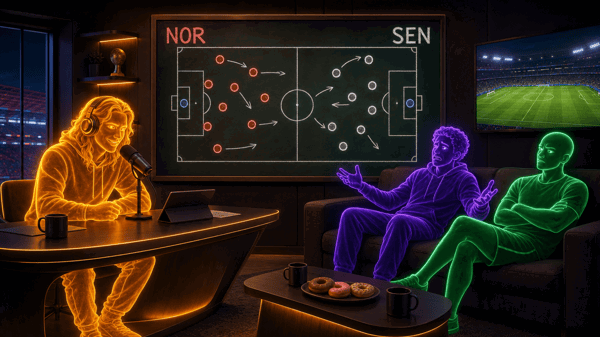
Norway vs Senegal: clarity points to Solbakken’s side

World Cup 2026 brings Norway and Senegal together at 23 June 2026, 00:00 UTC. This is not a match to stroll into with a paper umbrella; both sides have pace, power and real qualification pressure.
Norway bring the cleaner script
The best thing about Norway’s setup is how little mystery there is. Ståle Solbakken is expected to keep faith with his strongest structure, with Ødegaard conducting and Aursnes plus Berge keeping the orchestra in tune.
That matters because Norway do not look like a side experimenting with the cutlery drawer before dinner. A midfield of Ødegaard, Berge and Aursnes gives them control, cover and a proper launchpad for the front three.
Haaland already announced himself with two goals against Iraq, and he changes the geometry of every penalty area he enters. Sørloth stretches one side, Nusa attacks the other, and suddenly defenders have more fires than buckets.
Norway’s recent 4-1 win over Iraq may have flattered the control level, but it still showed their match-winning edge. Even when the game gets scruffy, they have the kind of forward who can turn a half-chance into a headline.
Senegal’s danger is real, but so are the doubts
Senegal are not being dismissed here, not for a second. Mané, Sarr and Jackson can turn open grass into a racetrack, and Norway’s full-backs will need excellent timing when they push on.
The concern is that Senegal’s team news leaves the same questions sitting on the table. Koulibaly and Gana Gueye bring class and authority, but recent reports around sharpness and physical freshness are hard to ignore.
Wiwsport’s local reaction after the France defeat was not exactly a trumpet parade. Thiaw was under scrutiny for trusting the senior spine and waiting too long before changing an attack that was not quite clicking.
That is where the price looks a shade too generous on Norway. Senegal’s counter-attacking quality is being respected, but perhaps too much weight is being given to reputation and not enough to the current clarity gap.
If Senegal press high, the reward can be dangerous turnovers and quick attacks. The risk is that one clean lane opens into Haaland, Ødegaard or Nusa, and then the whole match tilts like a tray on a busy café table.
The stakes favour a sharp Norway
Norway have a strong incentive to play for the win, because another victory would likely settle their path through the group. Solbakken’s public tone has been about performance, not arithmetic, which is usually healthier for the blood pressure.
Senegal, after losing to France, cannot simply tuck this one under the pillow and wait for Iraq. A draw keeps them alive, but it also keeps the final round loaded with tension, so they must balance urgency with caution.
There is also the MetLife surface, described by Solbakken as extremely fast if rain gets involved. That can make transitions more dangerous, but it also rewards the side with cleaner spacing and more rehearsed attacking routes.
For me, that side is Norway. Senegal have enough quality to make this uncomfortable, but Norway’s settled roles, fit-looking back four and sharper attacking connections make the win the right angle.