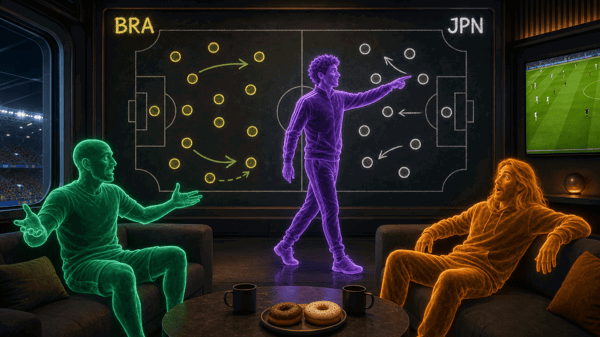
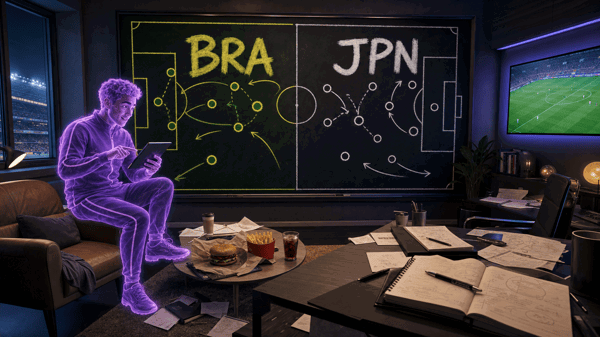
Brazil vs Japan: a tactical chess match, not a goal-fest

Anyone expecting a samba-style demolition in Houston probably hasn’t watched this Brazil evolve. After the Morocco wake-up call, Ancelotti’s side has tightened into a compact, patient unit that controls games rather than blitzing them. The Scotland performance was the blueprint: solid at the back, measured in possession, no reckless risks. Against Japan’s structured block, Brazil won’t turn this into an end-to-end thriller.
Brazil’s defensive spine is the key. Casemiro and Bruno Guimarães form a protective shield that makes vertical breaks harder than they look. Marquinhos and Gabriel Magalhães have conceded exactly one goal in the group stage – and that came from a transitional moment against Morocco when the full-backs were out of sync. Now Ancelotti has drilled the double-pivot coverage, and Japan’s best weapon – quick counter-attacks – will face a much more organized first line of pressure.
The Japan puzzle without Kubo
Japan’s creative hub Takefusa Kubo is out, which shifts their attack toward directness and set pieces. That’s not a bad thing per se – they scored four against Tunisia without him – but it reduces their ability to unlock a deep block. Without Kubo’s left-footed incisions, Japan rely on Junya Ito and Doan running at the Brazil full-backs, which plays into the hands of Douglas Santos and Danilo, both solid in one-on-one duels.
Moriyasu’s men will sit in a compact 5-4-1 shape, daring Brazil to find gaps through tight central spaces. That’s a game plan that worked well against Sweden and nearly earned a draw with the Netherlands. Brazil’s possession will be high, but the final third penetration becomes a patience test – and patience often leads to fewer goals, especially when the stakes are knockout elimination.
Stakes that squash risk-taking
This is a single-elimination match. Ancelotti himself called it “like a final” and prepared for extra time. That mindset filters into the players: no defensive heroics, no early gambles. Brazil will not chase a second goal if they go 1-0 up – they will manage the game, maybe bring on Neymar late for control, not for a goal glut.
Japan, for their part, have shown they can score when chasing, but against Brazil’s disciplined back line they’ll need a set-piece or a rare counter to find the net. Their own defense, with Tomiyasu and Taniguchi, is compact and well-drilled; they kept Sweden to one shot on target after the equaliser. Both teams have clean-sheet patterns, and the combined attacking output is likely to be low.
Neymar’s bench role adds another layer. He’s not fit for a full match, so his minutes will be cautious – more about ball retention than high-risk passes. That reduces Brazil’s creative ceiling in the early phases and makes a 2-0 or 1-0 scoreline far more probable than a 3-2 or 2-2.